EN
Insulated Bucket Trucks V.S. Aerial Work Platforms
Insulated Bucket Trucks V.S. Aerial Work Platforms
Dec 16, 2025
In a city at night, an aerial work platform is parked by the roadside and repairing streetlights. Not far away, an insulated bucket truck with a very similar appearance is maintaining on overhead power lines. At first glance, the two vehicles look almost same. But in terms of safety standards, the difference between them is significant. Choosing the wrong vehicles may result in electric shock accidents at worst.
I. Main Feature
From an external perspective, insulated bucket trucks and aerial work platforms appear similar in overall structure and operating form. Both are built on a vehicle chassis and equipped with extendable boom systems and aerial work buckets, which makes it difficult for non-professionals to distinguish between them at first glance. However, there are fundamental differences in key structural details.
The booms and work buckets of insulated bucket trucks are typically made of high-strength insulating materials. Their work buckets are more enclosed and robust in structure, and the entire system has undergone strict electrical safety and insulation testing. Therefore, they allow safe operation on or in close proximity to energized power lines. For example, our GKJH20 insulated bucket trucks are rated for operation at 46 kV under the ANSI A92.2 standard. The maximum working height of bucket is 20m, the load capacity of bucket is 280kg, and the bucket roation is± 90°. Among these main operating parameters, our insulated bucket trucks can significantly reduce the time for power outage coordination and waiting. This results in a clear 70% improvement in overall operational efficiency and a shorter emergency repair.
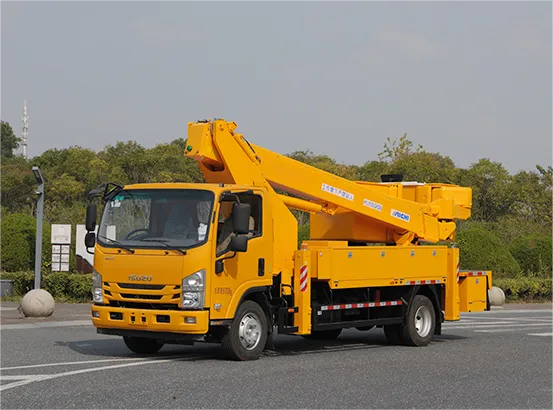
In contrast, the work buckets of general aerial work platforms are usually constructed from metal or conventional composite materials. Their design focuses on load capacity and stability rather than electrical insulation, which means they can only be used after power has been disconnected or when a safe distance from live electrical lines is ensured.
II. Applications
In the field of areial operations, insulated bucket trucks are primarily used in electrical system and are suitable for high-altitude environments where there is a risk of electric shock. They are especially essential in situations where power shutdown is not possible, including emergency power repairs and substation servicing. Their key advantage presents in their reliable electrical insulation and operational safety, even when working in close proximity to energized components. Even in narrow residential streets, our GKJH12 10kV insulated pickup can also ensures the safety of arborist and effectively prevents the risk of electric shock.
.webp)
Compare to insulated bucket trucks, aerial work platforms are designed for general high-altitude tasks that do not involve electrical hazards. Typical applications include municipal streetlight maintenance, building construction, and landscaping.
Overall, while insulated bucket trucks and aerial work platforms may appear similar in appearance, they differ fundamentally in functional positioning and safety levels. Scientific equipment selection and standardized operation not only help improve work efficiency, but also ensure the safety and lives of aerial operation personnel.
The introduction of insulated bucket trucks represents not only an upgrade in equipment, but also a step forward in safety and power operation models for aerial work. By pursuing higher safety standards and greater operational efficiency, an increasing number of enterprises are gradually driving power operations toward a more professional, refined, and modernized direction.

Recent Posts

October 26, 2016
The Most Successful Engineering Contractor

Oct 09, 2024
Regular Checklist for Aerial Lift Inspections
Sep 02, 2024
Bucket Operation TipsContact Us
Product Information
Quantity
Unit
Piece
Support order samples, customization, wholesale direct, and complete payment. If the product you look for does not have corresponding customized content, pls fill out the form below to contact us, and we will reply ASAP.